
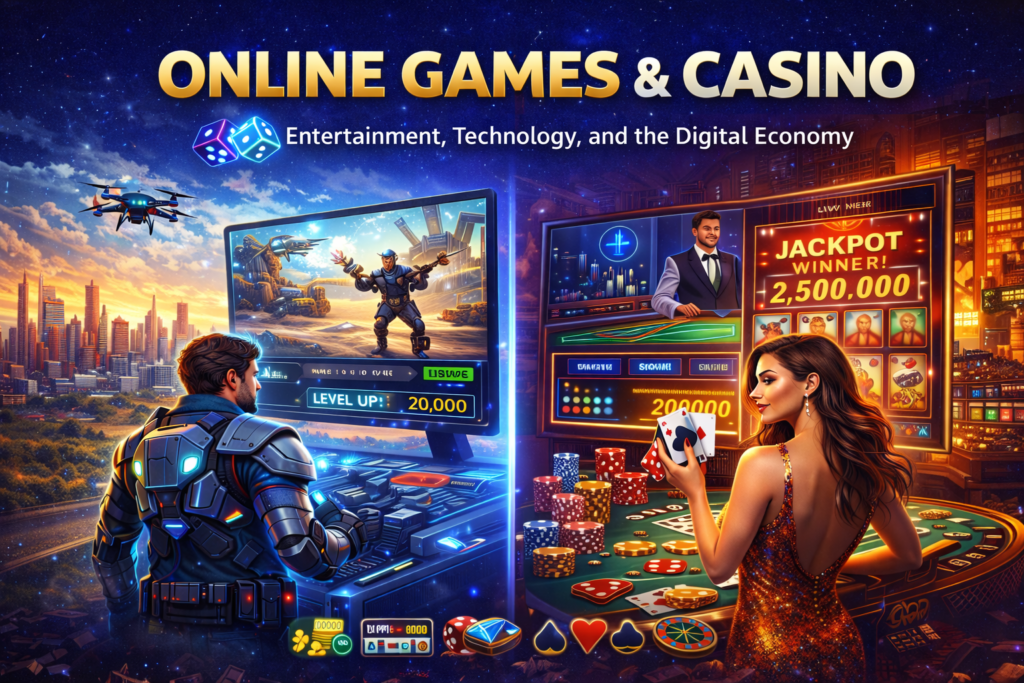
The digital revolution has transformed almost every aspect of human entertainment, and one of the most dynamic transformations has occurred in the world of online games and casinos. What once required physical locations, gaming halls, and casinos has now moved seamlessly into our smartphones, laptops, and tablets.
Today, millions of players around the world log in daily to play online games, try their luck at casino games, compete in multiplayer tournaments, or enjoy casual gaming experiences from the comfort of their homes. The online gaming and casino industry is no longer just about fun—it has become a global multi-billion-dollar ecosystem combining technology, psychology, entertainment, and digital finance.
This blog explores the evolution, types, benefits, risks, technology, and future of online gaming and online casinos, giving you a complete picture of this fast-growing digital industry.
1. Understanding Online Games and Online Casinos
What Are Online Games?
Online games are digital games played over the internet. They range from simple browser-based games to complex multiplayer experiences involving real-time interaction with players across the globe.
Common categories include:
- Casual games
- Strategy games
- Multiplayer online games
- Mobile games
- Skill-based games
- Esports and competitive gaming
Online games focus primarily on skill, strategy, reaction time, and entertainment, though some include elements of chance.
What Is an Online Casino?
An online casino is a digital platform where users can play traditional casino games using virtual or real money. These platforms replicate real casino experiences with added convenience and variety.
Popular online casino games include:
- Slots
- Poker
- Blackjack
- Roulette
- Baccarat
- Live dealer games
Unlike many online games, casinos rely heavily on chance and probability, although certain games involve strategic decision-making.
2. Evolution of Online Gaming and Casino Platforms
Early Beginnings
Online gaming began in the late 1990s with basic multiplayer games and simple casino websites offering poker and slots. Internet speed and device limitations kept experiences minimal.
The Mobile Revolution
The arrival of smartphones changed everything. Mobile apps allowed:
- 24/7 access
- Touch-based gameplay
- Faster deposits and withdrawals
- Location-independent gaming
Modern Era
Today’s platforms feature:
- HD graphics
- Live streaming dealers
- AI-driven recommendations
- Blockchain and crypto payments
- Cross-platform play
The industry has matured into a professional, regulated, and tech-driven space.
3. Types of Online Games
A. Casual Online Games
Casual games are easy to learn and designed for short sessions. Examples include puzzle games, card games, and arcade-style games.
Why they’re popular:
- No learning curve
- Stress-free entertainment
- Suitable for all ages
B. Multiplayer Online Games
These games allow players to interact, compete, or collaborate in real time.
Features include:
- Global matchmaking
- In-game chat and communities
- Competitive rankings
C. Skill-Based Online Games
Skill-based games reward players based on ability rather than luck. Examples include chess, rummy, fantasy sports, and trivia games.
D. Esports and Competitive Gaming
Professional gaming has become a career option. Players compete in tournaments with large prize pools, sponsorships, and live audiences.
4. Types of Online Casino Games
A. Online Slot Games
Slots are the most played casino games online due to:
- Simple gameplay
- Attractive visuals
- Multiple themes and bonuses
B. Table Games
These include blackjack, roulette, baccarat, and poker. They offer a balance of luck and strategy.
C. Live Casino Games
Live casinos stream real dealers via video, offering:
- Real-time interaction
- Authentic casino atmosphere
- Chat features with dealers and players
D. Jackpot Games
Progressive jackpots pool money from multiple players, sometimes reaching millions in prize value.
5. Why Online Games and Casinos Are So Popular
1. Convenience
Players can access games anytime, anywhere—no travel required.
2. Variety
Online platforms offer thousands of games compared to limited options in physical venues.
3. Bonuses and Rewards
Online casinos provide:
- Welcome bonuses
- Free spins
- Loyalty programs
- Cashback offers
4. Social Interaction
Multiplayer games and live casinos allow social engagement, chat, and community building.
5. Technological Innovation
Advanced graphics, immersive sound, and smooth gameplay enhance user experience.
6. The Role of Technology
A. Artificial Intelligence (AI)
AI is used for:
- Player behavior analysis
- Fraud detection
- Personalized game recommendations
- Responsible gaming monitoring
B. Random Number Generators (RNGs)
RNGs ensure fairness in casino games by generating unpredictable outcomes.
C. Live Streaming Technology
High-quality streaming enables live dealer games with minimal latency.
D. Blockchain and Cryptocurrency
Crypto casinos offer:
- Faster transactions
- Enhanced privacy
- Transparent gameplay
- Provably fair systems
7. Legal and Regulatory Landscape
Global Variations
Online gaming and casino laws vary widely:
- Fully legal and regulated in some countries
- Restricted or banned in others
- Grey areas with partial permissions
Importance of Licensing
Licensed platforms ensure:
- Fair gameplay
- Player fund protection
- Secure transactions
- Responsible gaming policies
Players should always verify licensing before participating.
8. Responsible Gaming and Player Safety
Why Responsible Gaming Matters
While online games and casinos offer entertainment, excessive use can lead to addiction and financial issues.
Responsible Gaming Tools
Reputable platforms offer:
- Deposit limits
- Loss limits
- Time reminders
- Self-exclusion options
Player Awareness
Players should:
- Set budgets
- Avoid chasing losses
- Treat games as entertainment, not income
9. Economic Impact of Online Gaming and Casinos
Industry Growth
The online gaming and casino industry contributes billions to the global economy through:
- Employment
- Technology development
- Marketing and advertising
- Tax revenues
Job Creation
Roles include:
- Game developers
- Designers
- Data analysts
- Customer support
- Marketing professionals
Digital Payments and Fintech
Online casinos have driven innovation in:
- Digital wallets
- Crypto payments
- Secure transaction systems
10. Online Games vs Online Casinos: Key Differences
| Aspect | Online Games | Online Casinos |
|---|---|---|
| Skill vs Luck | Mostly skill-based | Mostly luck-based |
| Risk | Low to moderate | Financial risk involved |
| Audience | Broad age range | Adults only |
| Monetization | Ads, in-game purchases | Bets and wagers |
Both serve different user motivations but coexist within the same digital entertainment ecosystem.
11. Challenges in the Industry
A. Addiction Risks
Problem gambling remains a major concern.
B. Regulatory Uncertainty
Changing laws can impact platforms and players.
C. Cybersecurity Threats
Platforms must protect against data breaches and fraud.
D. Market Saturation
Competition is intense, requiring constant innovation.
12. Future of Online Games and Casinos
1. Metaverse Integration
Virtual worlds may host immersive casinos and gaming arenas.
2. Virtual Reality (VR) and Augmented Reality (AR)
VR casinos could simulate real-life casino floors.
3. AI-Driven Personalization
Hyper-personalized gaming experiences based on user behavior.
4. Increased Regulation
Stronger consumer protection and transparency standards.
5. Skill + Chance Hybrid Games
New formats combining gaming and gambling mechanics.
13. Tips for Players
- Choose licensed platforms only
- Read terms and conditions
- Use bonuses wisely
- Never gamble more than you can afford to lose
- Balance gaming with real-life activities
Conclusion
Online games and casinos represent one of the most exciting intersections of technology, entertainment, and digital economics. From casual gaming sessions to high-stakes casino play, these platforms cater to a wide spectrum of players worldwide.
As technology continues to evolve, the industry will become more immersive, secure, and personalized. However, with opportunity comes responsibility—both platforms and players must ensure that gaming remains safe, fair, and enjoyable.
Whether you’re a casual gamer, a competitive player, or someone curious about online casinos, understanding this ecosystem helps you make informed and responsible choices in the digital entertainment world.